In SAM registration, “Submitted” status indicates information has been provided but not yet validated, while “Active” status confirms full processing and validation. Only entities with Active status can receive federal contract awards, regardless of proposal quality. The changeover typically takes up to 10 business days and involves multiple verification checks, including IRS validation. Companies should initiate renewals at least 45 days before expiration to maintain eligibility and avoid payment delays or contract termination. The following sections explore maintenance strategies for continuous compliance.
The Critical Difference Between “Submitted” and “Active” SAM Status
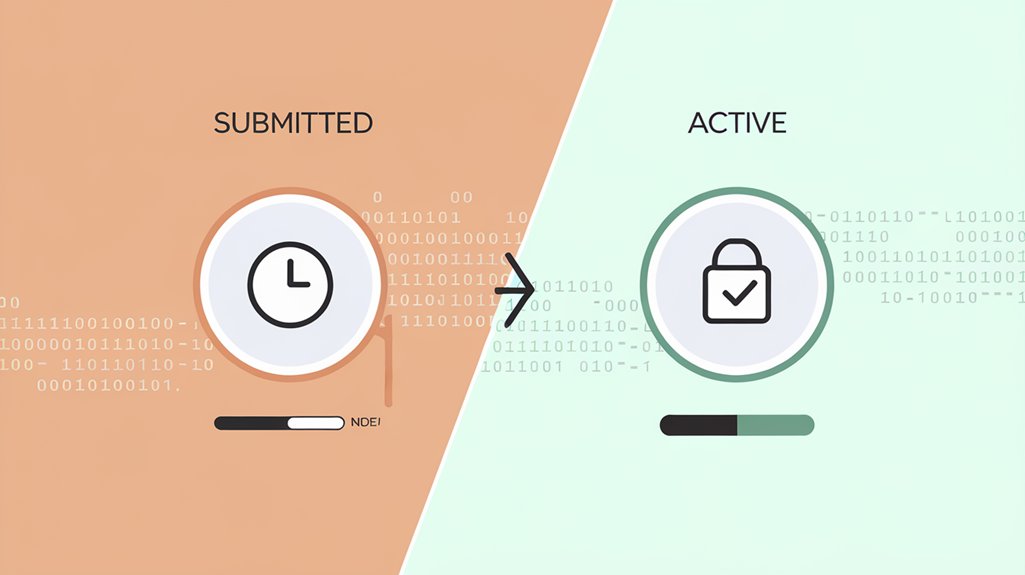
When it comes to federal contracting opportunities, the distinction between “Submitted” and “Active” status in the System for Award Management (SAM) represents a critical threshold that can determine an organization’s eligibility for government contracts.
A submitted status indicates only that registration information has been provided to SAM.gov but has not completed the validation process. During this phase, entities cannot participate in federal contracting opportunities and must wait for their information to be verified.
In contrast, active status signifies that an entity’s registration has been fully processed and validated, typically within 10 business days after submission. Only organizations with active status are legally eligible to submit proposals, be evaluated, and receive contract awards.
Federal regulations, including FAR 52.204-7, mandate continuous active registration throughout all contracting phases. Entities must provide detailed procurement information during registration to maintain compliance with federal requirements. Once active, a registration maintains this status for 365 days from the submission date, requiring timely renewal to avoid lapses.
Recent court cases have established that even brief lapses in active status can result in disqualification from contracts. Maintaining compliance strategies is essential for businesses to safeguard their eligibility and enhance their competitive position when pursuing federal procurement opportunities.
Timeline and Process for Moving From “Submitted” to “Active”
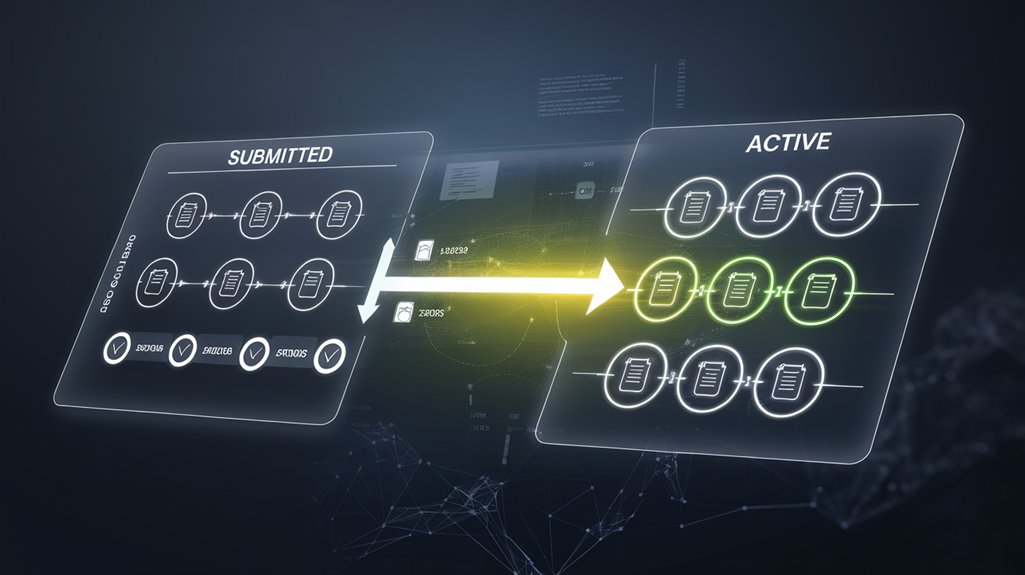
The journey from “Submitted” to “Active” status in the System for Award Management follows a structured timeline with specific verification checkpoints. When an organization completes registration, SAM immediately initiates processing and verification across multiple government databases, including IRS TIN validation.
The registration timeline typically depends on several factors that affect processing speed:
- Information accuracy and completeness
- Successful database verification results
- Resolution of any identified discrepancies
- Current SAM processing volume
Since April 2022, the system automatically assigns a Unique Entity Identifier (UEI) during registration, replacing the previous D-U-N-S number system. This UEI facilitates identification throughout government systems.
Registrants can track their status through SAM’s monitoring tools, including the “My Incidents” section that displays ticket information.
Once activated, registrations remain valid for 365 days before requiring renewal to maintain eligibility for federal contracts and programs.
Businesses should prepare meticulous documentation in advance to avoid common pitfalls that could delay the process from submitted to active status.
Business Impact of SAM Status on Federal Contracting Opportunities

Federal contractors must maintain an active SAM registration status to participate in government procurement opportunities, as this status directly determines their eligibility for contract awards and payments.
Companies with only a “submitted” status cannot receive contract awards, regardless of how compelling their proposals may be. This fundamental distinction affects contract eligibility throughout the procurement lifecycle. Recent court cases have shown that contractors who fail to maintain active SAM status may face immediate disqualification from competitive bids. Processing validation can take several weeks, so contractors should initiate renewals at least 45 days before expiration to avoid costly lapses. Proactive renewal strategies are essential for preventing service disruptions and maintaining eligibility for government contracts.
SAM registration must progress beyond “submitted” status for award eligibility, regardless of proposal quality.
Government agencies verify registration status before finalizing awards to confirm compliance with FAR 52.204-7 requirements. Contractors with inactive or expired registrations face significant business consequences, including:
- Delayed payment processing for existing contracts
- Ineligibility for new contract opportunities
- Potential contract termination for non-compliance
- Vulnerability to bid protests from competitors
The financial implications extend beyond lost opportunities, as payment interruptions can disrupt cash flow and increase operational costs.
Maintaining active status provides a competitive advantage and confirms uninterrupted government business relationships.
Frequently Asked Questions
Can I Expedite My SAM Registration From “Submitted” to “Active”?
Entities seeking expedited processing of SAM registration can take several steps to accelerate the timeline.
Ensuring all information is accurate, submitting a correctly completed notarized letter promptly, and having required documents prepared in advance are essential.
While the standard process takes 2-8 weeks, using third-party services like GSE may help expedite registration.
For technical issues, contacting the SAM helpdesk immediately can prevent unnecessary delays in moving from “submitted” to “active” status.
What Happens if My SAM Status Expires During Contract Performance?
When a SAM registration expires during contract performance, several consequences occur.
The contractor faces immediate payment disruptions, as federal agencies cannot process invoices with an expired registration. Contract compliance becomes compromised, potentially preventing modifications or extensions.
The contractor loses eligibility for new awards while existing work may be suspended.
Registration renewal should be initiated at least 60 days before expiration to avoid these disruptions and maintain uninterrupted contract performance.
Are Subcontractors Required to Maintain an Active SAM Registration?
As of March 2023, subcontractors are not required to maintain an active SAM registration. This policy update removes previous subcontractor compliance obligations regarding SAM.gov.
However, prime contractors still bear responsibility for ensuring overall regulatory compliance within their contracts. While registration requirements no longer apply to subcontractors, voluntary registration may offer benefits such as increased visibility to potential prime contractors.
Prime contractors should verify current regulations when establishing subcontractor relationships, as federal procurement policies can change.
How Do I Correct Information Errors After My SAM Submission?
To correct information errors after a SAM submission, entities should navigate to their workspace in SAM.gov and initiate the specific changes needed.
The information correction process requires careful attention to formatting details, especially with names and addresses. Users should avoid punctuation discrepancies that might trigger validation issues.
When submitting corrections, providing supporting documentation such as business licenses or IRS documents promptly helps resolve validation incidents.
For technical assistance, entities can utilize the help desk tickets via FSD.gov or consult SAM.gov’s Help section.
Can International Entities Achieve “Active” SAM Status for U.S. Federal Contracts?
Yes, international entities can achieve “active” SAM status for U.S. federal contracts.
International registration requires obtaining a Unique Entity ID (UEI), providing accurate business information, and completing verification processes.
While the process may take several weeks to months, successful registration grants eligibility to bid on federal contracts, increases visibility to potential partners, and enhances credibility with U.S. government agencies.
International entities must comply with all U.S. federal regulations and renew their registration annually.